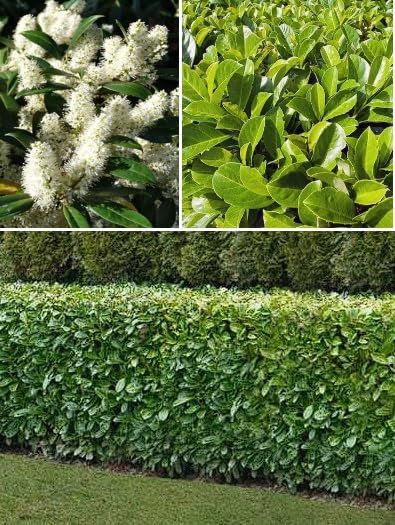
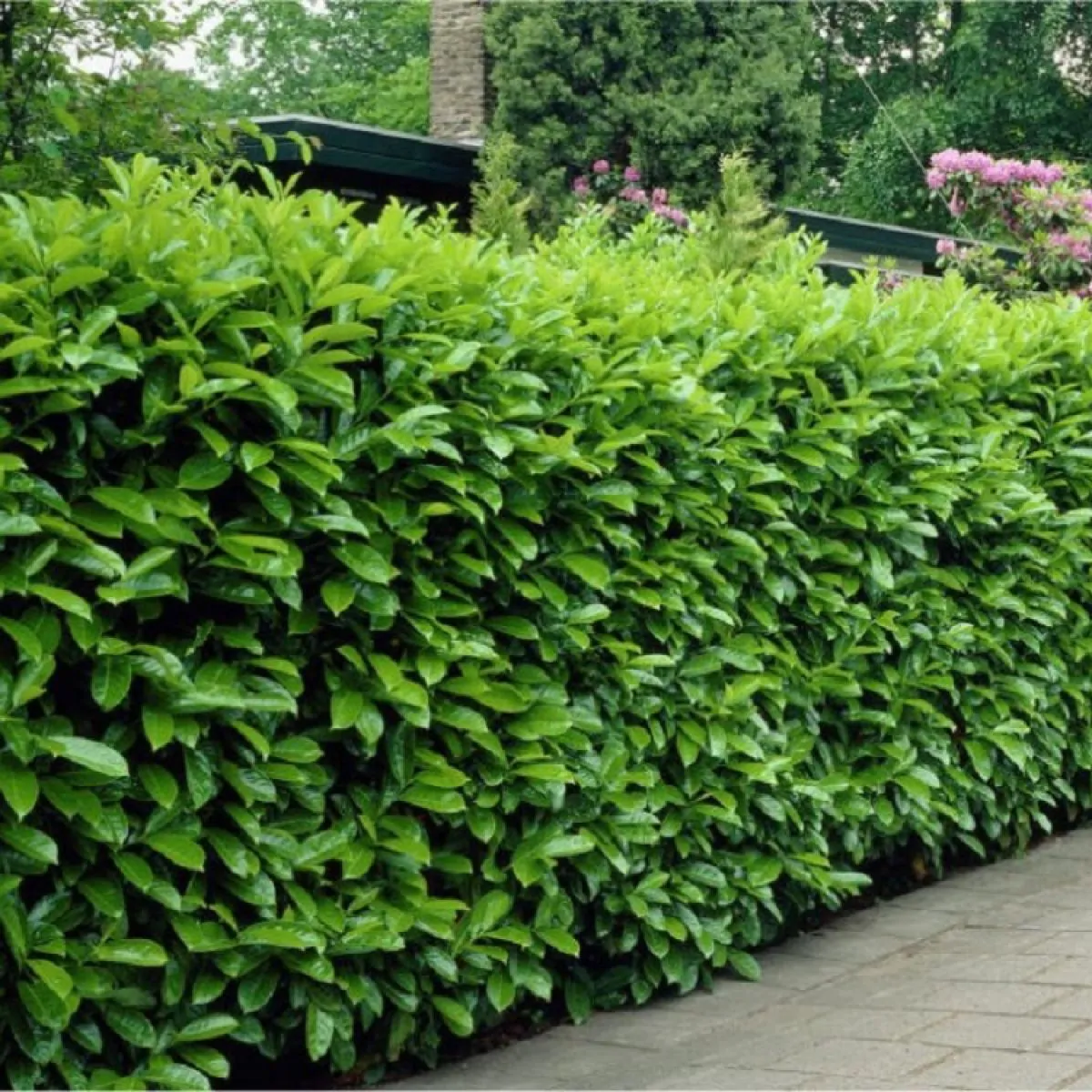


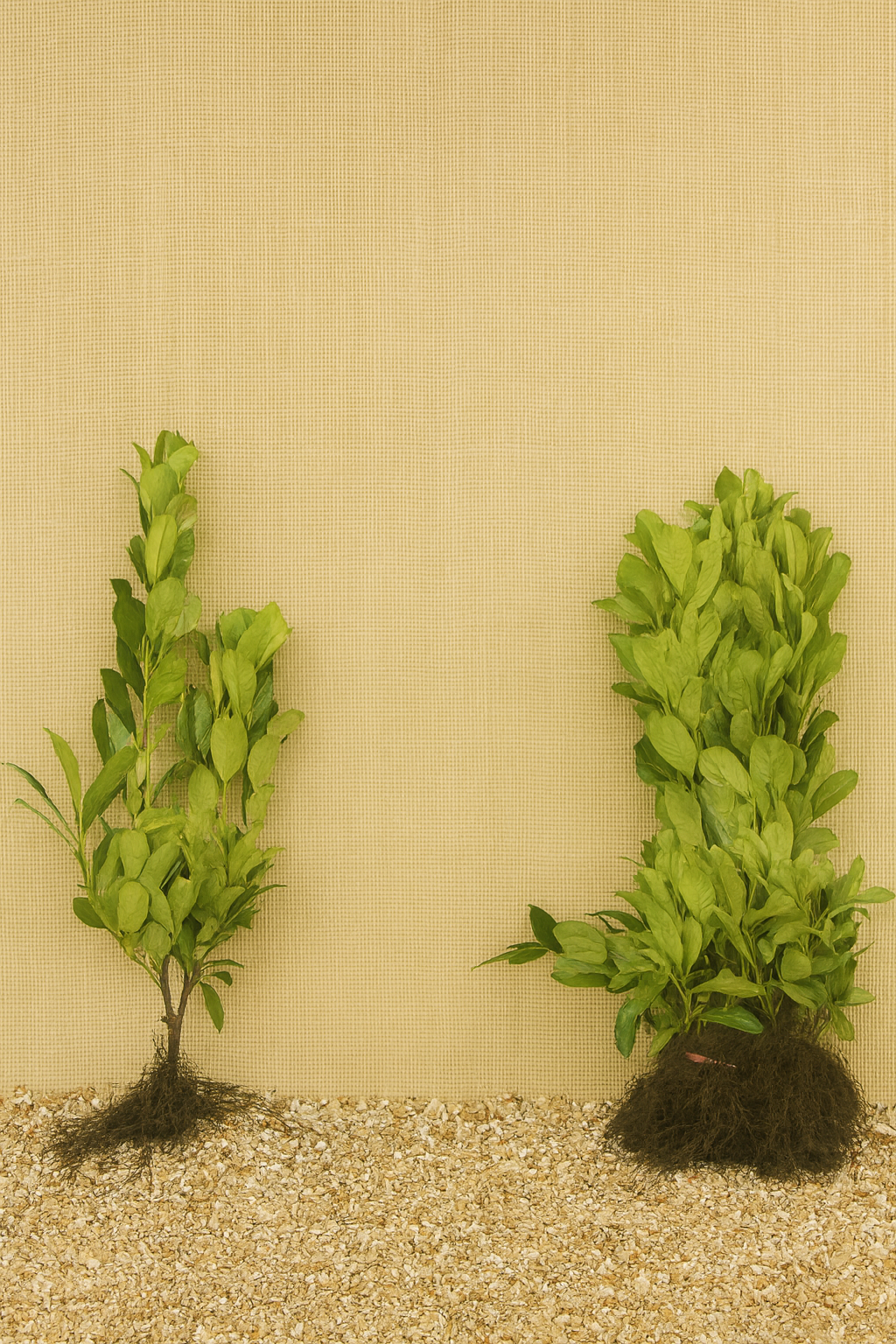
Cherry Laurel (Prunus laurocerasus ‘Rotundifolia’) Bare Root
Price range: €2.50 through €3.10 inc VAT
You save
AVAILABLE OCTOBER TO APRIL
Latin Name: Prunus laurocerasus ‘Rotundifolia’
Hardiness: Fully Hardy. Will survive unprotected outdoors in most areas of the UK and Ireland, even in the harshest winters.
Growth: Fast. Expect to see prolific growth, especially during growing season. 4-8m The plant’s ultimate height in typical growing conditions.
Sun: Full Sun to Full Shade. Tolerates the complete range of light levels, a very accommodating plant!
How many plants do I need?
30-40cm: 4 plants per metre
60-80cm: 3 plants per metre
AVAILABLE OCTOBER TO APRIL
Latin Name: Prunus laurocerasus 'Rotundifolia'
Common Name: Cherry Laurel
Origin: Southeastern Europe and Southwestern Asia
Hardiness: Fully Hardy. Will survive unprotected outdoors in most areas of the UK and Ireland, even in the harshest winters.
Growth: Fast. Expect to see prolific growth, especially during growing season. 4-8m The plant's ultimate height in typical growing conditions.
Sun: Full Sun to Full Shade. Tolerates the complete range of light levels, a very accommodating plant!
Exposure/Position: Highly adaptable to different growing conditions, including full sun, full shade, and urban environments.
Soil: Moist but Well Drained. Soil that allows water to drain at a moderate rate, without the water pooling.
Moisture: Medium. Once it is established, this plant is likely to only require watering during drier periods.
Habit: Bushy. 4-8m The plant's ultimate spread in typical growing conditions.
Foliage: Evergreen. Always in leaf throughout the year. It won't lose all its leaves at any one time.
Maintenance: Low. Minimal skill or input needed beyond the basics, a very independent plant.
Feed: Regularly once a fortnight with a balanced fertilizer between May to October
Planting
Laurel hedge plants are easy to grow in just about any normal garden soil with just a couple of points to bear in mind here:
- If you have chalky soil then its best to avoid the Cherry Laurel varieties – instead choose from the Bay Laurel, Portuguese Laurel or Spotted Laurel as these three varieties all do well on chalk, or you could choose from our complete list of plants suitable for chalky soil.
- If your soil is poorly drained and becomes waterlogged during wet weather – then Laurels aren’t the best plant for you, they are unlikely to grow successfully in these conditions. We would recommend you take a look at our list of plants for wet sites instead.
Aftercare
Laurel hedges of all sizes can have a natural habit of growing wider with each passing year, taking up more and more valuable garden space. Be sure to cut your hedge back tight each time, to maintain a lovely dense and bushy hedge and don’t be frightened of being hard on it! Laurel hedging can be cut back quite far, as long as you avoid doing so in the winter months when frost can damage the plant if there are newly cut edges.
Laurel hedges can technically be trimmed at any time; the main advice we can offer is to try and avoid trimming Laurel in the coldest months of the year as the cut edges can be susceptible to frost damage.
The best time for trimming, in our opinion, is either in late Spring (before growth has started, so lots of healthy new branches can grow) or in mid to late Autumn before Winter starts in earnest so the cut edges have a chance to heal over before the coldest weather.
Naturally, the best time to trim a Laurel hedge is when it has become overgrown; when it is crowding other plants and doesn’t look tidy anymore, you should trim it back to keep everything neat. It is extremely beneficial to the plant’s health to do this – pruning rejuvenates overgrown Laurel hedges, encouraging healthy new growth in the spring and summer seasons.
Trimming Laurel hedges as a pest and disease prevention tactic is also necessary. Removing any dead, diseased, or damaged branches is always the first priority when trimming, and after that, you can focus on clearing some of the interior branches to improve air circulation in the plant. This will keep it dry and help to prevent fungal diseases. Have a look at the pests and diseases that affect Laurel hedges so you know how to prevent them.
While many advise trimming Laurel hedging plants with secateurs so you can avoid leaving half-cut leaves, it really isn’t necessary. You can just as easily use shears or a hedge trimmer – the cut edges will heal and cover with new growth quickly, especially if trimming is carried out in the Spring.
Here at Prime Hedges we either use a clean, sharp pair of secateurs, or sharp hedge trimmers. Hedge trimmers are of course faster! However, you may find aesthetically you prefer to use secateurs – not to avoid damage to the plant – simply to avoid the brown ‘bruising’ that can occur on leaf edges cut with a hedge cutter.
After cutting away anything dead, damaged or diseased, focus on trying to ensure that sunlight can reach the centre of the plant – if you do that, you can’t go wrong!